
The short answer
- Appliance collection arrangements depend on the village, the equipment being removed and any separate work needed on its connections.
- Illinois EPA lists televisions and computers among the electronic devices banned from landfills, so use an electronics collection program.
- Household chemical programs have their own accepted-item lists and residency rules, separate from arrangements for furniture or other household hauling.
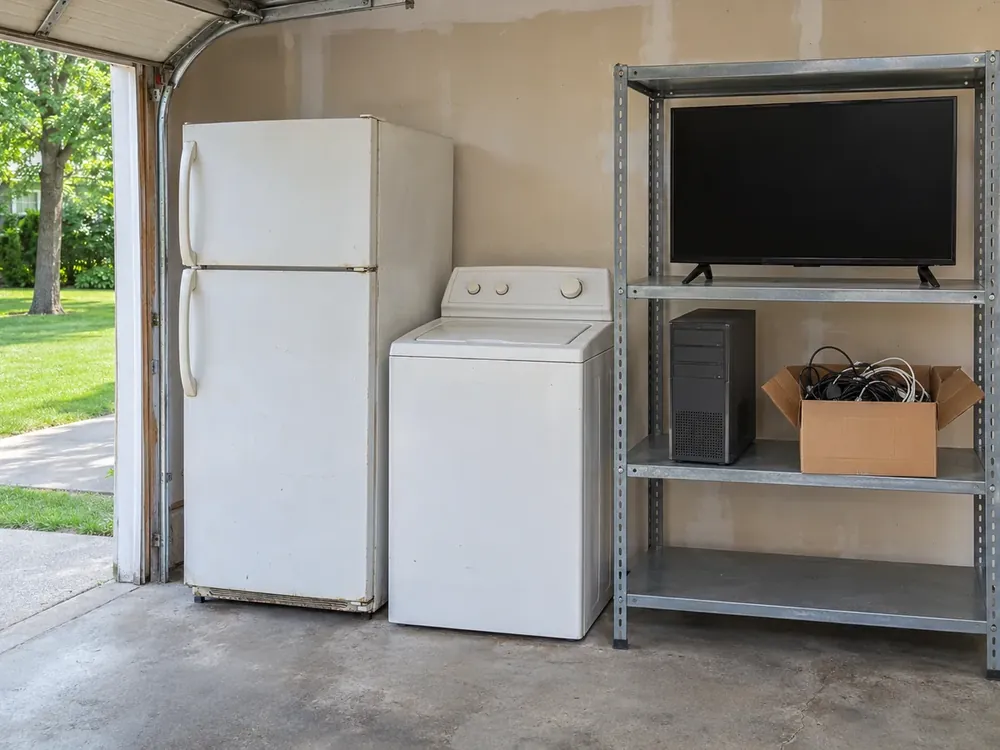
Separate Appliance Collection From Special Drop-Off Items
Appliances, electronics and household chemicals need separate decisions about collection. Call about what's there now, even if you haven't chosen what stays. Appliance disposal services near Barrington start with the appliance type, its location and any connections that need separate attention.
Keep Working Items and Arrange Any Resale Yourself
Items you want to keep stay outside the removal scope. Identify the washer that's staying or the small appliance promised to a relative. A working item intended for sale belongs with the things you are keeping until you arrange its handover. Charity pickup or a resale listing is yours to arrange; explain those plans during the hauling call.
White Goods Follow the Village's Collection Arrangements
White goods often need a separate collection booking rather than an ordinary bulk set-out. Barrington's refuse rules direct residents to arrange special appliance pickups with Groot. Mount Prospect's collection page requires arrangements directly with Republic Services and an additional appliance fee paid on pickup day.
Ask the village collection service about any per-item charge or tag requirement for your appliance; a sticker used elsewhere isn't a rule for every suburb. For indoor appliance removal, tell us whether the machine is in a basement, kitchen or garage. Leave the carrying to the crew. A gas, water or hard-wired connection is separate work; ask on the call who handles it.
Refrigerators Need a Separate Disposal Route
Refrigerators and freezers belong in an appliance collection program that accounts for refrigerant. US EPA's appliance disposal page explains the final disposer's responsibility for refrigerant recovery. Use the village's appliance arrangements and ask who handles the necessary separate work; don't treat a refrigerator as ordinary trash disposal.
Electronics Go to an Electronics Program
Televisions and computers need an electronics collection route because Illinois EPA lists them as landfill-banned devices. An old screen belongs with special drop-off items, away from furniture intended for hauling.
Barrington's electronics program offers scheduled curbside collection arranged at least a day ahead. For another option, Hoffman Estates lists a seasonal SWANCC electronics drop-off for member-community residents with proof of residency. Use the program's current accepted-device list when planning a trip.
Household Chemicals Go to the Named Public Program
Paint, household chemicals, fuel, batteries, propane and tires belong on the special-disposal list, never on the junk truck. Use the appropriate public-program route below; acceptance differs between locations.
| Household location | Public-program route | Rule that changes the trip |
|---|---|---|
| Lake County | SWALCO household chemical waste | Illinois residents may bring residential waste by appointment; business waste is excluded. |
| Cook, McHenry, Kane or DuPage County | Naperville household hazardous waste facility | Open to all Illinois residents for household waste; accepts oil-based paint, household batteries and propane tanks up to 20 pounds, but excludes latex paint, medications and tires. |
SWALCO's accepted-materials list includes architectural latex and oil-based paints and household batteries, but excludes automotive and marine lead-acid batteries. Its chemical collections exclude propane tanks and tires. Use SWALCO's separate special-material collection for labeled small single-use propane cylinders by appointment, and its disposal directory to find a route for tires. Ask the agency about the exact item rather than treating every drop-off alike.
Settle the Hauling Scope and Access Together
The hauling plan identifies what goes, what stays and how the crew reaches the items. Mention stairs, narrow doors, parking and locked gates during the call. Keep hallways and the route to the truck clear for the visit. One of our local junk removal partners will review the agreed items, access and price with you before loading begins.